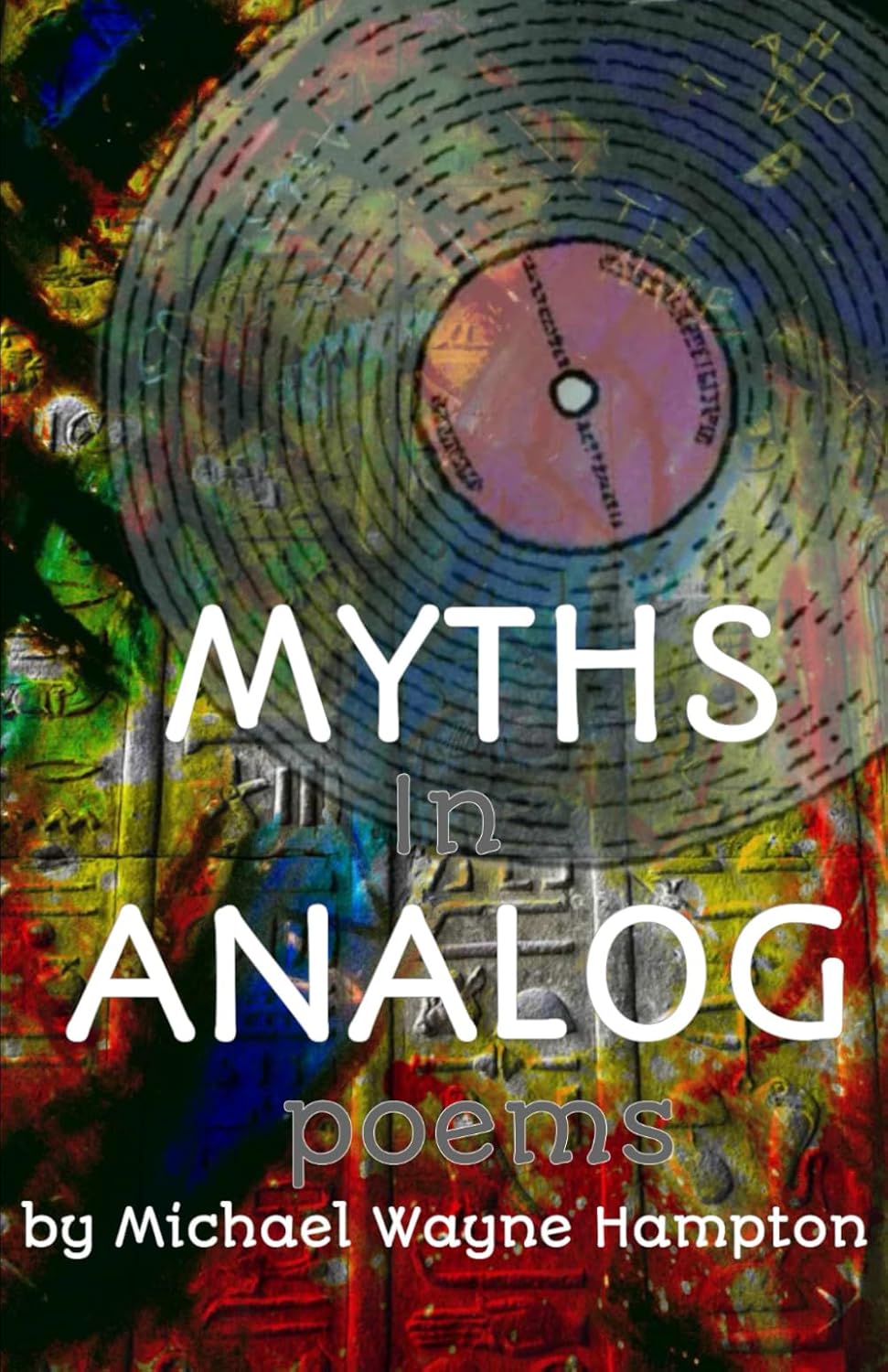
My first poetry collection Myths in Analog is out now! You can get your copy here

My first poetry collection Myths in Analog is out now! You can get your copy here

Trauma Nostalgia
For the last few weeks, I have had a serious case of trauma nostalgia. Despite all the terrible, life ending and upending events that came with the pandemic year, I feel wistful for the months when I had nothing better to do than write, read, take long hikes or bike trips. That year, when there few public places I was allowed to be, when time was surplus might be as close as I ever get to a period of true retirement. I know others who feel the same, bonded by those months of background fear that was eased by hours to paint, learn a language, or pursue some other stowed away passion. This is nothing new. After World War II, Londoners grieved that they had never felt closer to their fellow man then during near constant bombing.
Today is the first day of the new year. I have spent it tearing pages out of old journals or playing cards alone. I’ve organized and refiled poems, short stories, essays, and novel both finished and abandoned. January 1st is meant to be a day for resolutions, for returning to the task of building an ideal life, reaffirming that faith, what Baptists refer to as rededication. Or to say the same with brevity— purpose. The weight of the concept of purpose has caused me to waste most of the day. This is what Baptists call backsliding, returning to one’s old bad ways.
The Japanese have a term for one’s true inherent purpose—ikagi. It is like Aristoltle’s concept of ergon. A knife’s purpose is to cut. A flower’s purpose is to bloom. And my purpose is… That’s my current philosophical struggle. On one hand it feels as limiting to accept a singular pre-determined meaning as it does to believe in a solitary soulmate. On the other, moving from one thing to the next risks never achieving one’s highest potential. If one’s ikagi or ergon is inherent it should be obvious, an aspect of self that has always existed. If I accept this, then my purpose is to create. It’s what I’ve always done. The time has come to confess and rededicate my life.
Last year I wrote poems every week for a month and a half. Three were eventually published. By summer that spark dimmed and died. Maybe I lost faith in my work. It is a human thing to do. On her death bed even Mother Theresa confessed that she hadn’t prayed in years. But here I am, a prodigal son returning home to the page, making a new a confession of faith.
This year I will write. I will be teaching half of my course loads in two local prisons where I will teach others to write. And on this day, one year in the future, if I only have a stack of half-formed, flawed work there is a Japanese term for that as well; wabi-sabi, or beautifully imperfect.
I wish you all the best, and hope that this year you find your one unique ikagi through the trauma of being.
Read this
How Music Works David Byrnes
Watch this

I have three new poems out today at hobartpulp. Check them out!

The philosopher Eugene Thacker states in Tentacles Long as Night: The Horror of Philosophy Vol.3 that horror essentially exists in the tension between trying to reconcile the two statements “It’s all in my head,” and “It really happened.” Though he is writing about the nature of horror the same can be said of memory which often visits upon our minds the same paradox. The sensation is much like that described by Anna Kavan in her novel Ice as, “A world seen through nylon.” The principle is that an echo is not a repetition, but an imperfect recreation like a memory. What we hold close to is impartial, romanticized, or fabrication. But, as humans and artists, these partial illusions are often vital to our ability to create. What matters more than what clings to our hearts.
“Every being longs to find its complement, it’s missing half.”
-Plato, The Symposium
For the last few months, I’ve been writing and doing my best. But I’ve tricked, defeated, failed, and gone back again. This is life. This is the work.
The once-famous have grave markers the size of doormats or have had their cremated bodies stuffed in copper vaults like mail slots. I keep hearing “because their words had forked no lighting.” I keep hearing “most men live lives of quiet desperation.” I hear that the days pass faster every year.
I have never given a book away, and had it read. Remember that what you give away, be it a paperback or your heart, will be judged worthless if offered freely.
Percy Bysshe Shelley died in a shipwreck off the coast of Italy. When his decomposed body washed up on the beach it was cremated, yet his heart would not burn. It was sent to his wife who preserved it in a jar of wine.
For ages, there was the tradition of burying one’s heart apart from one’s body. More than a token or totem, it was an offering of where the genuine seat of your being and passion is found regardless of kinship or appreciation. Chopin died in Paris but had his heart buried separately in his native Poland. Where would you bury your heart?
Throughout his career, Ray Bradbury had a sign above his desk that read “Don’t Think.” He felt that when writing one should be feeling, rather than intellectualizing. Thinking led to making excuses, second-guessing, and lying to oneself whereas feeling allowed one to be present with the work rather than over it.
The automatic writing of the surrealists accepting that reason, forethought, and revision only served to mute the voice that came from the other realm beyond living until the car needs gas again or your student loan is overdue once again.
I am working on a new novel. I am writing poetry. I am trying to believe.
Wittgenstein’s philosophy is framed by language- “The limits of language are the limits of my world.”
I end each night feeling like a condemned man with an appeal in-process that he doubts will be noticed until it is too late to save him. And know that artists make terrible partners. We exist in the same timeline but in a different reality.
“All moments, past and future, always have existed and always will exist.”- Kurt Vonnegut, Slaughterhouse Five (A view consistent with current quantum physics understanding as explained in the book Existential Physics by Sabine Hossenfelder)
The work is to move beyond trying to write artful sentences, to the surreal, obscene, and opaque to reflect the world as it is. Mad. Loving. Confused. Permanent, and fading.
Fail, kiss death, and rise to try again. It doesn’t matter, but it matters. And nonsense is the last remaining logic.
Read this:
“The Death of Literature” Mary Gaitskill
Listen to this:
Benjamin Tod
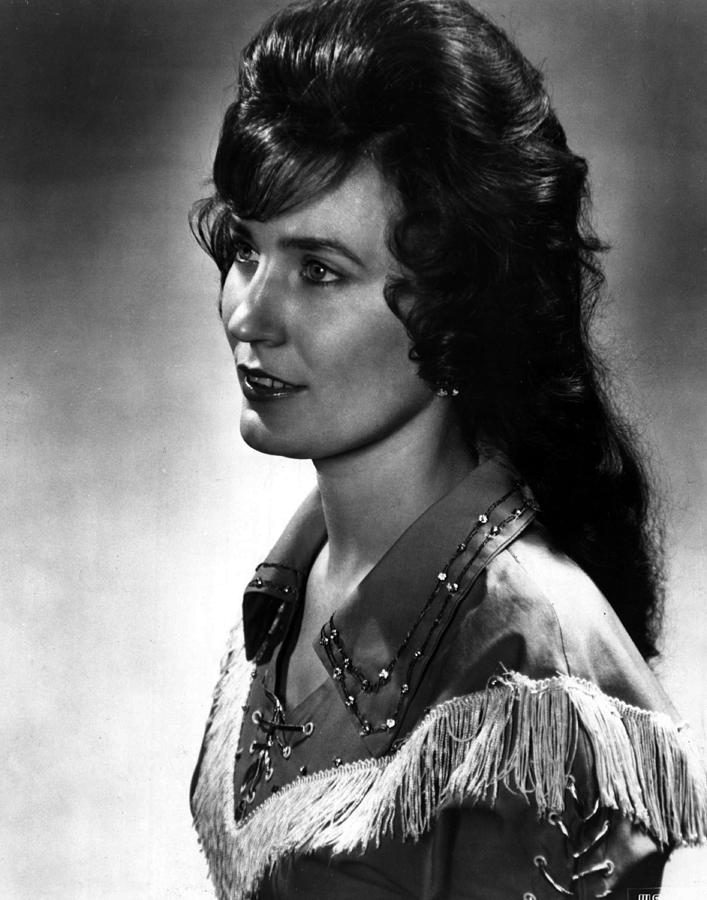
After a morning spent desperately trying to help freshmen understand the crucial need for unwavering honesty in a personal essay this morning, I heard the news that Loretta Lynn had passed. I shut the door to my office and spent what time passed crying hard at my desk. My colleagues were consoling if confused, and I was too shaken and heartbroken to try to make sense of how deeply saddened I was to my fellow faculty members who took the news with casual reverence to the passing of a celebrity who enjoyed a long life. I was too upset, and the middle of the day between meetings and classes, was no time to try to relate why I fell into such mourning. So, to make explain my grief truthfully as an elegy for Loretta and to live out my own lecture I will try to do so here. But note that words fail, and the term essay derives from the French “essayer” which means to try. This is me trying.
My family originally came from Letcher County Kentucky, where Loretta Lynn was raised at the head of Butcher Holler before we moved to another coal town in Clay County. Eastern Kentucky is synonymous with poverty and ignorance; an embarrassing backward area of the country open to be mocked for a catalog of hillbilly tropes from inbreeding to feuding. It is an area that has been economically ravaged by coal and timber companies who left behind a legacy of black lung, poisonous groundwater, and once-wooded hills blown up and bulldozed into barren mesas. It has been exploited in the national media from Walter Cronkite’s 1964 special “Depressed Area USA,” to HBO’s 1999 America Undercover Special “American Hollow,” to “American Idol Gives Back” in 2008. None of these examples, or any other that come to mind, represented the goodness of where I come from. At best, as in the recent floodings in eastern Kentucky, they highlighted the pitiful circumstances of those most dejected and offered tokens of compassion, that like the focus of disaster relief, fades and forgotten.
This is why Loretta Lynn mattered so much to natives like me, and why I fell to tears. Not because she was a celebrity, but because she was a symbol that stood in direct opposition to the bad humor, privileged judgment, and embarrassment Appalachian Kentuckians face. She wasn’t a joke no matter how open she was about her life in poverty or her sometimes volatile marriage. She was loved by the public without reservations, and in that, in a small way, we felt a part of us was loved and respected as well.
When people ask me where I come from, I say that I was raised halfway between Loretta Lynn and Dolly Parton. This isn’t just for the sake of brevity. It is an explanation born of pride.
The remnants of Van Lear and dozens of other out-of-state coal companies still mark the state routes passing through towns like Whitesburg, Hazard, Hyden, and my hometown of Manchester. In brick and steel, still bearing the company names, these towering dinosaurs of oil-stained coal tipples, of conveyors rusted to the color of sulfur, and derelict rail lines whose dry-rotted ties now serve as planters for fox sedge, crooked stem asters, and June grass. The few coal mines that remain are in their twilight. The industry has left broken men, opioid addiction, and an ever-increasing population flight. The prospects for any industry replacing coal with jobs offering a living wage in such a geographically challenging area are slim at best.
In the early eighties, when the mines were still a viable option for men with families to support, I was taught in grade school the two types of coal: anthracite and bituminous. My teachers must have believed this was important for boys to know. By the time I studied English at the University of Kentucky my professors stressed that I had to lose my heavy Appalachian accent as it would harm my chances of being both taken seriously and employed. But I am sure in my heart that those same professors loved Loretta and would not dare change a single tone or inflection of her speech.
The mines have been closing all my life. I’ve been made fun of for my accent no matter how reduced it has become through conscious practice. I have seen the land where I come from continue to be exploited and disregarded in a hundred ways, but until today, I still had Loretta praising all that was patronized, denigrated, and ignored.
Loretta Lynn was the embodiment of eastern Kentucky and its people. She glorified the hardship of working the land until its people and hills were inseparable. She honored the lessons of poverty that shaped her. She was fierce and generous, wrapped in faith when there was no clear promise on the horizon, and continued to love fully despite times when good reason would argue for separation. She remained a part of the hills and of all of us. A rare spirit from a hard land who was loved so completely that our people carried a small ember of hope that we mattered as well.
I did not cry at my desk and on my drive home today because Loretta was famous. My heart ached because she was that special person who those from the hills understand without explanation: not family— but kin.
My flash fiction story “Space Man” is up in the latest issue of Bending Genres. You can read it here.


My interview for Now, Appalachia (part of the Authors on the Air network) is now available on iTunes, Spotify, Soundcloud, and anywhere else podcasts are available. You can listen to it online here.
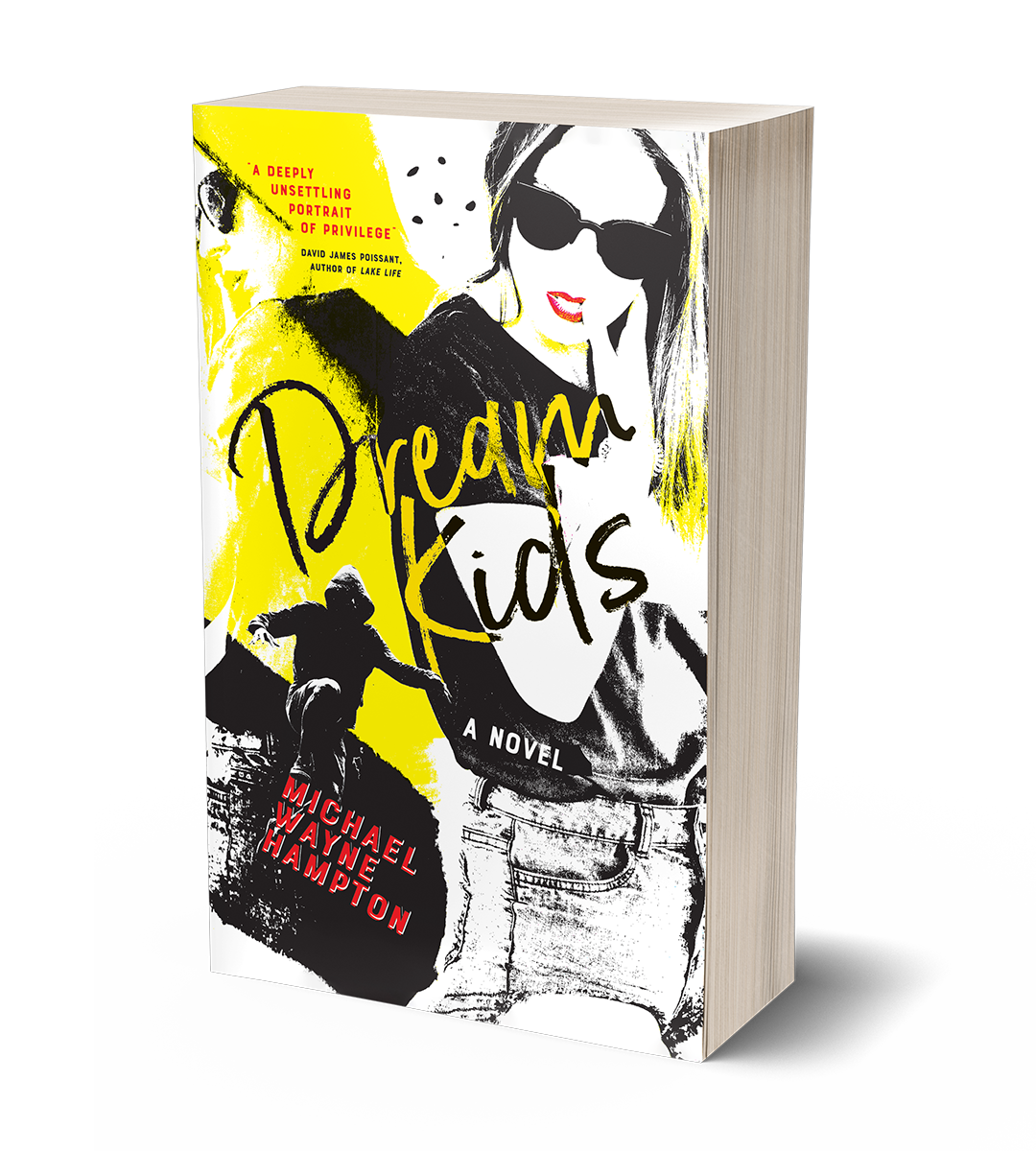
I’m excited to announce that my punk rock versus privilege YA novel is officially out in the world! You can learn more about it and get your copy by clicking here

“Everything dies, baby that’s a fact. But maybe everything that dies someday comes back.” – The Band “Atlantic City”
In Chinese languages, the meaning of a word or character depends on its context. The same character can mean head, idea, or thought. The same sound can mean sinking or seeking. This isn’t unique to Mandarin or Cantonese. English has more words like this than can be easily numbered. One is green. It can refer to the color, the feeling of envy, or something young. As this winter marches toward its close in morning frost and slow gray rains that word has been on my mind. Over the last few weeks, I have bought plants and made plans. The first green shoots of spring are still a month away, but I am sowing for the future.
My new novel Dream Kids will be released at the end of this month. I have been busy trying to do what I can to get the word out. Since music plays a large thematic role in the book I made a playlist with the songs featured in the novel on Spotify for fun. You can find it here.
I have also been planning my race season after years away due to the pandemic. My first trail race is this Saturday, and although it will be in the 20s and definitely not green, I am looking forward to running the trails again. I have obstacle races on my calendar for the summer so it’s best to get used to the suffering early.
Other than that the last few months have been quiet. I’m deciding where my teaching journey will lead me next, working on a few projects, training, and learning. Soon we will all be reborn to ourselves like each spring before. The cloud banks are already fraying for the sun. May we all return kinder, fresh new creatures in the weeks ahead.
All the best,
Mike
Pre-order my new book:
Listen to this:
R.E.M. “I Remember California”
Read this:
Light Chaser Peter F. Hamilton and Gareth L. Powell
Watch this:If we are connected on Instagram or Twitter you’ve seen the amazing trailers my publisher made for Dream Kids. If you haven’t seen them yet I posted some on Youtube and you can check them out here.
 michaelwaynehampton.com